Pressure tank replacement cost in Pahrump (2026)
A waterlogged pressure tank is one of the cheapest fixes on a well system — and one of the most commonly ignored until it takes the pump down with it. Here’s what replacement costs, the warning signs, and why Pahrump’s heat makes this worse than it is elsewhere.
Quick answer
$800–$1,500+ installed for a standard replacement (HomeGuide 2026). A simple air recharge, if the tank itself is still sound, often costs nothing but a service call.
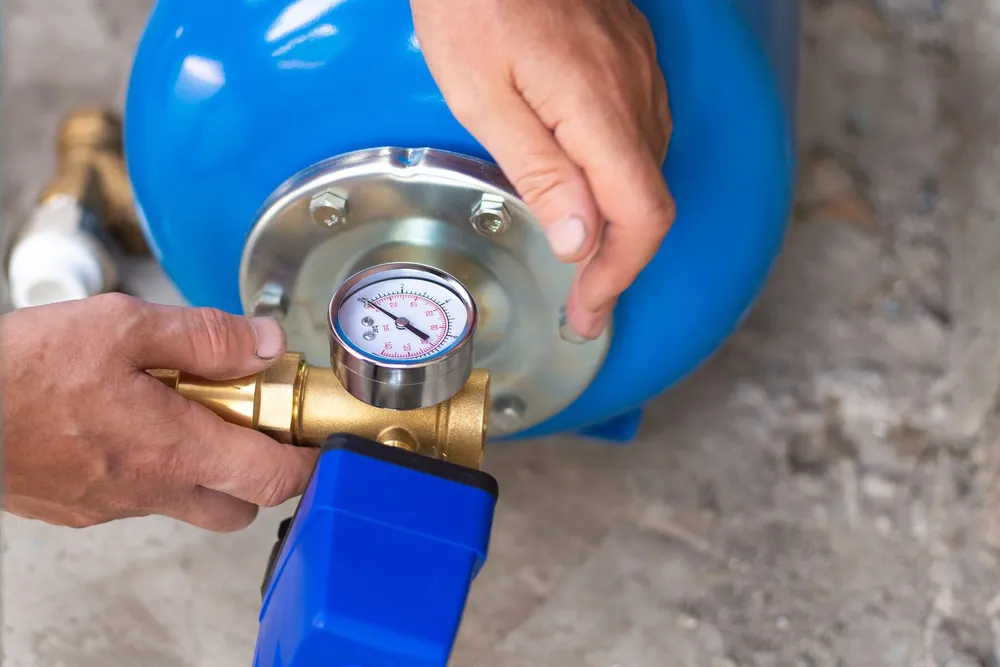
What a pressure tank actually does
A well pump doesn’t run every time you open a faucet — the pressure tank stores a cushion of pressurized water (and air) so the pump only has to start when that cushion runs low. A healthy tank means the pump cycles on maybe a handful of times an hour under normal use. A failing tank means the pump starts and stops every few seconds, which is loud, hard on the motor, and the single most common preventable cause of an early pump failure on a Pahrump well.
Signs your pressure tank is failing
- Rapid, short cycling. The pump kicks on and off every few seconds when you run a faucet or flush a toilet, instead of running steadily for a stretch and then resting.
- The tap test. Tap the side of the tank up and down its height. A healthy tank sounds hollow up top (air) and solid lower down (water). A waterlogged tank sounds solid — or nearly solid — top to bottom; there’s no air cushion left.
- Pressure swings hard. Water pressure surges strong, then drops noticeably, in a fast repeating pattern, rather than staying roughly steady.
- Visible rust, bulging, or a wet floor. A rusted-through shell or a leaking fitting means the tank itself has failed structurally — replace, don’t recharge.
- Higher electric bills with no other explanation. A pump cycling constantly draws more power than one cycling normally.
Why this is worse in Pahrump
Pressure tanks — especially the bladder inside them — degrade faster under heat cycling, and a lot of Pahrump’s well equipment sits in an outbuilding, well house, or exposed enclosure that swings from cold desert nights to well over 100°F in summer afternoons. That thermal stress on the bladder, combined with well water hardness (see our water treatment guide) that can accelerate fitting corrosion, means tanks here often show waterlogging symptoms years before a manufacturer’s rated life would suggest. Checking the tank at every service call — not just when the pump acts up — is cheap insurance against a bigger bill.
2026 cost table
| Service | 2026 cost | Notes |
|---|---|---|
| Air recharge (tank & bladder sound) | Often a service-call fee only | DIY-friendly if you have a compressor and a pressure gauge |
| Standard pressure tank replacement | $800–$1,500+ | Size, brand, and access all move the number |
| Larger / constant-pressure system tank | Toward the top of the range and above | Often paired with a $2,000–$5,000+ VFD/constant-pressure pump system |
| Labor (if billed separately) | $75–$150/hr plumber; $150–$300/hr two-man pump crew | Most tank swaps are a single-visit job for one tech |
Compare that to letting a bad tank keep hammering your pump: a pump replacement in Pahrump commonly runs $2,000–$5,000+ once you account for local setting depths. An $800–$1,500 tank now is cheap next to an early pump job you didn’t need to have.
Recharge vs. replace — how to decide
- Run the tap test first. Solid-sounding top to bottom means waterlogged; that’s a recharge candidate if the tank is otherwise structurally sound.
- Check for a bike-pump-style Schrader valve on top of the tank. Drain the tank (close the valve to the pressure switch, open a faucet to relieve pressure), then add air to the pre-charge spec — typically 2 psi below your pump’s cut-in pressure (commonly around 38 psi on a 40/60 system).
- If it won’t hold air for more than a few days, the bladder has failed — that’s a replacement, not another recharge.
- If the shell shows rust, a bulge, or a leak, skip the recharge step entirely and replace.
- If the tank is undersized for your pump’s flow rate, replacing with a correctly sized tank fixes cycling that a recharge never will.
Our methodology
Cost figures on this site are compiled from national 2026 cost databases (HomeGuide, Angi, DrillerDB) cross-checked against Pahrump-area quotes and public data, and regulatory statements are cited to the Nevada State Engineer, Nye County Water District, and NDEP with a last-verified date. Prices are estimates, not quotes — your well depth and equipment determine the real number. Pressure tank figures are from HomeGuide’s 2026 well repair cost guide, cross-checked against the same source used for the rest of the site’s repair pricing, and verified 2026-07-20.
Related guides
Pressure tank questions, answered
How much does a pressure tank replacement cost in Pahrump?
Typically $800–$1,500+ installed, depending on tank size and whether the fittings and check valve get replaced at the same time (HomeGuide 2026). Bigger constant-pressure setups or tanks in a hard-to-access location can run higher.
How do I know if it’s the pressure tank and not the pump?
Rapid, frequent cycling (the pump kicking on and off every time you run a faucet) is the classic pressure-tank symptom, while a pump that runs constantly and never builds pressure at all points more toward the pump itself. The no-water triage guide walks through both, and the tap test below will usually tell you which one you’re dealing with in under a minute.
Can I recharge the air in my tank myself?
Often, yes, if the tank shell and bladder are otherwise sound — draining the tank and adding air at the Schrader valve with a bike pump or compressor to the pre-charge spec (usually 2 psi below your pump’s cut-in pressure) is a DIY-friendly fix. If the tank keeps losing air within days, or it’s waterlogged (no air cushion left, feels solid when tapped), the bladder or tank itself has failed and it needs replacement, not another recharge.
Does a bad pressure tank actually damage my pump?
Yes — short-cycling from a waterlogged tank is one of the most common preventable pump killers, especially in Pahrump’s summer heat. Every extra start-cycle stresses the motor and windings; a pump that should last 10–15 years can fail years early on a tank that’s been silently waterlogged for months.
What size pressure tank do I need?
Tank size should be matched to your pump’s flow rate and your household’s peak demand — undersized tanks cycle constantly regardless of condition. A local pro can size it correctly from your pump’s GPM and your fixture count; get this checked any time a tank is replaced rather than assuming a like-for-like swap is right.
Free · No obligation
Get a pressure tank checked or replaced
Tell us what's going on with your well and a pre-screened independent local pro will call you back — usually the same day.