Water treatment for Pahrump well water
Private wells aren’t tested for you the way city water is. Here’s what’s actually worth testing for in the Pahrump Valley, what each treatment option really costs in 2026, and how to avoid getting sold a system you don’t need.
Quick answer
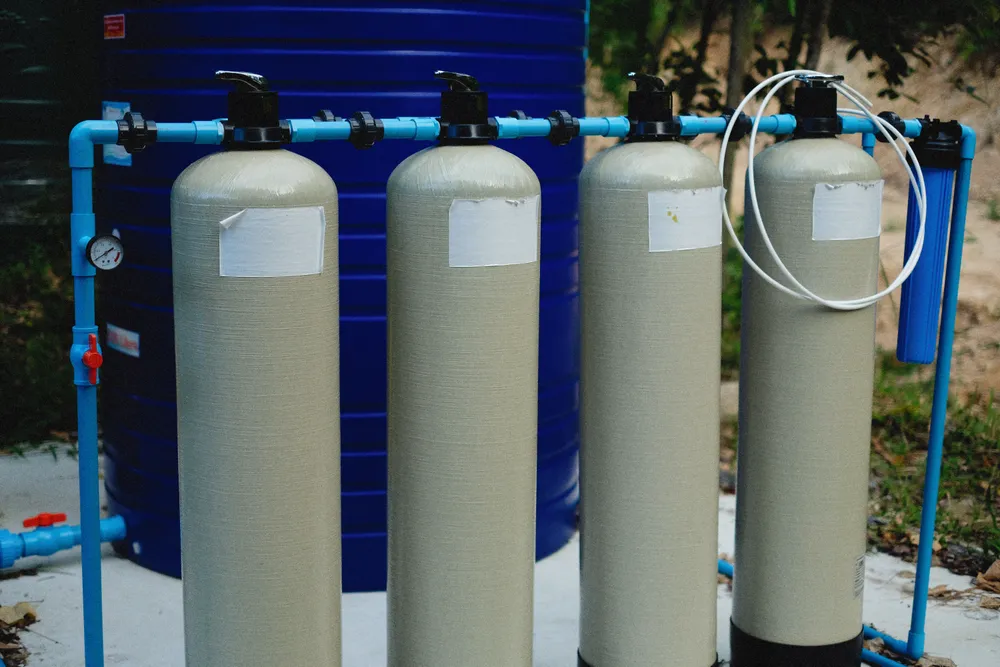
Test before you treat. Hardness is common and harmless (just annoying); arsenic shows up in parts of the valley and is worth an actual lab test. Installed systems typically run $2,000–$6,000, from a $1,200 softener alone up to $8,000+ for whole-house reverse osmosis.
What’s actually in Pahrump well water
Nevada doesn’t regulate or routinely test private domestic wells the way municipal systems are tested — so the honest starting point for every homeowner here is: you don’t know what’s in your water until you test it. That said, two things come up often enough in this region to be worth planning around.
- Hardness. Groundwater across the Mojave and Great Basin region commonly carries elevated calcium and magnesium, showing up as scale on fixtures, soap that won’t lather, and shortened appliance life. It’s a nuisance and a cost issue, not a health issue — a home water hardness test (widely available, including DIY kits) tells you where you stand.
- Arsenic. This is the contaminant that actually matters for health, and it’s not evenly distributed. A 2022 Desert Research Institute study of Nevada private wells found 22% of over 170 tested wells exceeded the EPA’s 10 µg/L arsenic maximum contaminant level — but the elevated samples were concentrated in northern Nevada (Reno, Carson City, Fallon), not the Pahrump area. Nye County Water District general manager Daniel Weeks told the Pahrump Valley Times the district doesn’t see “a proliferation of excessive arsenic” locally, while noting NCWD is gathering more local groundwater data. That’s a reason to test your specific well, not a reason to assume the worst — full detail in the arsenic testing & treatment guide.
- Sediment and turbidity. More common in older wells or ones with aging screens, and often a sign the pump is pulling from deeper or dirtier water than it used to — see the pump service guide if cloudy water shows up alongside pressure changes.
- Rotten-egg odor (hydrogen sulfide). One of the most common well-water complaints in this valley — sometimes a $150 water-heater fix, sometimes a whole-house filtration job. Full breakdown in our sulfur smell guide.
- Iron staining. Orange-brown stains on fixtures and laundry from dissolved iron oxidizing on contact with air — see our iron staining guide for 2026 filter costs.
- Bacteria (E. coli/coliform). One of NCWD’s four priority local tests. A positive result usually means either a one-time shock chlorination or, for wells with a recurring problem, an ongoing UV disinfection system — see our UV & shock chlorination guide.
The decision path: test first, then treat what you actually have
- Get a certified independent lab test — not a free in-home test from a company that also sells equipment (more on that below). A basic panel covers hardness, TDS, and arsenic; ask your lab what else is worth adding for your area.
- Hardness only, no arsenic concern? A standalone water softener is usually the right, cheapest fix.
- Arsenic above 10 µg/L? You need dedicated arsenic treatment — either a point-of-entry (whole-house) system or, for drinking/cooking water only, a certified point-of-use reverse osmosis unit under the kitchen sink. A softener alone does not remove arsenic.
- Both hardness and arsenic? Most homes in this situation pair a softener (for the whole house) with a dedicated arsenic or RO system (for drinking water, or whole-house if the levels are high) rather than relying on one system to do both jobs.
2026 cost tiers
| System | Installed cost | Solves |
|---|---|---|
| Salt-based (ion exchange) softener | $1,200–$3,800 | Hardness only |
| Salt-free softener/conditioner | $1,500–$4,500 | Hardness (less effective on very hard water) |
| Under-sink reverse osmosis | $300–$950 | Drinking-water arsenic, taste, most dissolved contaminants — kitchen tap only |
| Point-of-entry arsenic system (ion exchange, whole-house) | $3,600–$5,200 | Arsenic, whole-house |
| Whole-house reverse osmosis | $4,800–$8,000+ | Broadest contaminant removal, whole-house — the premium tier |
For most Pahrump homes, the realistic all-in number lands at $2,000–$6,000 — typically a softener alone, or a softener paired with a point-of-entry arsenic system or under-sink RO. Whole-house RO is a real option but sits above that typical range; it’s worth it mainly for households with multiple water-quality concerns who want one system to handle all of them.
One budget trap worth knowing: cheaper adsorptive-media arsenic systems can look attractive upfront ($1,200–$1,800) but need media replacement roughly every 18 months at a similar cost each time — over a decade, a quality ion-exchange system is usually the better value despite the higher sticker price.
How to test, honestly
Skip the free in-home test from a company that’s also selling equipment — those tests are a sales tool, sometimes using strip tests or methods calibrated to look alarming, not a certified lab result. Instead:
- Use a Nevada-certified independent laboratory for a real water quality panel — your county health office can point you to certified labs.
- Check whether the Nye County Water District’s Water Level Measurement Program or related outreach has testing resources for your area — NCWD tracks well conditions across the valley.
- If a company’s free test comes back alarming, get a second, independent test before buying anything. A legitimate result should hold up to a second opinion.
Vetting a treatment dealer
- Ask for your actual numbers, in writing — µg/L for arsenic, grains per gallon for hardness — not just “your water is bad.”
- Get the system spec sheet, not just a brand name: capacity, media type, and expected media/membrane replacement schedule and cost.
- Ask what maintenance costs long-term — salt, filters, membranes, or resin replacement all have real recurring costs that change the honest price comparison between systems.
- Beware of scare-tactic free tests paired with same-day, high-pressure financing offers — a legitimate outfit is fine with you getting a second opinion.
Related guides
- Arsenic in Pahrump well water: test & treat
- Well water testing in Pahrump
- Rotten egg smell in well water
- Iron staining in well water
- UV disinfection & shock chlorination
- Well pump repair & service
Our methodology
Cost figures on this site are compiled from national 2026 cost databases (HomeGuide, Angi, DrillerDB) cross-checked against Pahrump-area quotes and public data, and regulatory statements are cited to the Nevada State Engineer, Nye County Water District, and NDEP with a last-verified date. Prices are estimates, not quotes — your well depth and equipment determine the real number. Treatment cost tiers on this page were compiled and cross-checked on 2026-07-20 from HomeGuide’s 2026 water softener and reverse osmosis cost guides and Mid Atlantic Water’s 2026 arsenic filter cost data. The arsenic prevalence statistic is cited to the Desert Research Institute’s 2022 Nevada private-well study (22% of 174 wells tested exceeded the EPA 10 µg/L limit) as reported by Pahrump Valley Times and referenced by Nye County Water District.
Water treatment questions
Do I actually need water treatment, or is this a sales pitch?
Test first — that’s the honest answer either way. Private wells in Nevada aren’t regulated or routinely tested like municipal water, so you genuinely don’t know what’s in yours until you test it. A certified independent lab test (not a free in-home test from whoever is trying to sell you a system) tells you whether you need anything at all, and if so, exactly what.
Is Pahrump well water safe to drink?
Most of it, most of the time — but “most” isn’t a guarantee for your specific well. Hardness (calcium and magnesium) is a widespread nuisance issue in this region — annoying, not dangerous. Arsenic is the contaminant worth actually testing for: a 2022 Desert Research Institute study found 22% of over 170 tested private Nevada wells exceeded the EPA’s 10 µg/L arsenic limit, but the elevated samples were concentrated in northern Nevada, not the Pahrump area — Nye County Water District’s general manager has said the district doesn’t see a proliferation of excessive arsenic locally. That’s a reason to test, not a reason to panic — see our arsenic testing & treatment guide.
What does a water treatment system cost in Pahrump?
A typical installed system runs $2,000–$6,000 depending on what you actually need. A standalone salt-based softener is the cheapest common fix at $1,200–$3,800 installed. Whole-house arsenic treatment (point-of-entry) typically runs $3,600–$5,200 installed. Whole-house reverse osmosis is the premium tier at $4,800–$8,000+; under-sink RO for drinking-water-only is far cheaper at $300–$950.
Should I soften my water or filter it, or both?
They solve different problems and often get paired. A softener addresses hardness (scale, soap scum, appliance wear) but does not remove arsenic or most other contaminants. Arsenic and most health-relevant contaminants need reverse osmosis or a dedicated point-of-entry arsenic system. A hard-water home with elevated arsenic commonly ends up with both — see the decision path below before you buy either.
Are "free water test" offers from treatment companies trustworthy?
Treat them as a sales tool, not a lab result. In-home test kits some dealers use are often designed to show alarming numbers that justify their most expensive system — sometimes using misleading test methods. For an honest baseline, use a certified independent lab (see the testing section below) before you talk to anyone selling equipment, or at minimum get a second, independent test before signing anything.
Free · No obligation
Get matched with a local water treatment pro
Tell us what's going on with your well and a pre-screened independent local pro will call you back — usually the same day.